
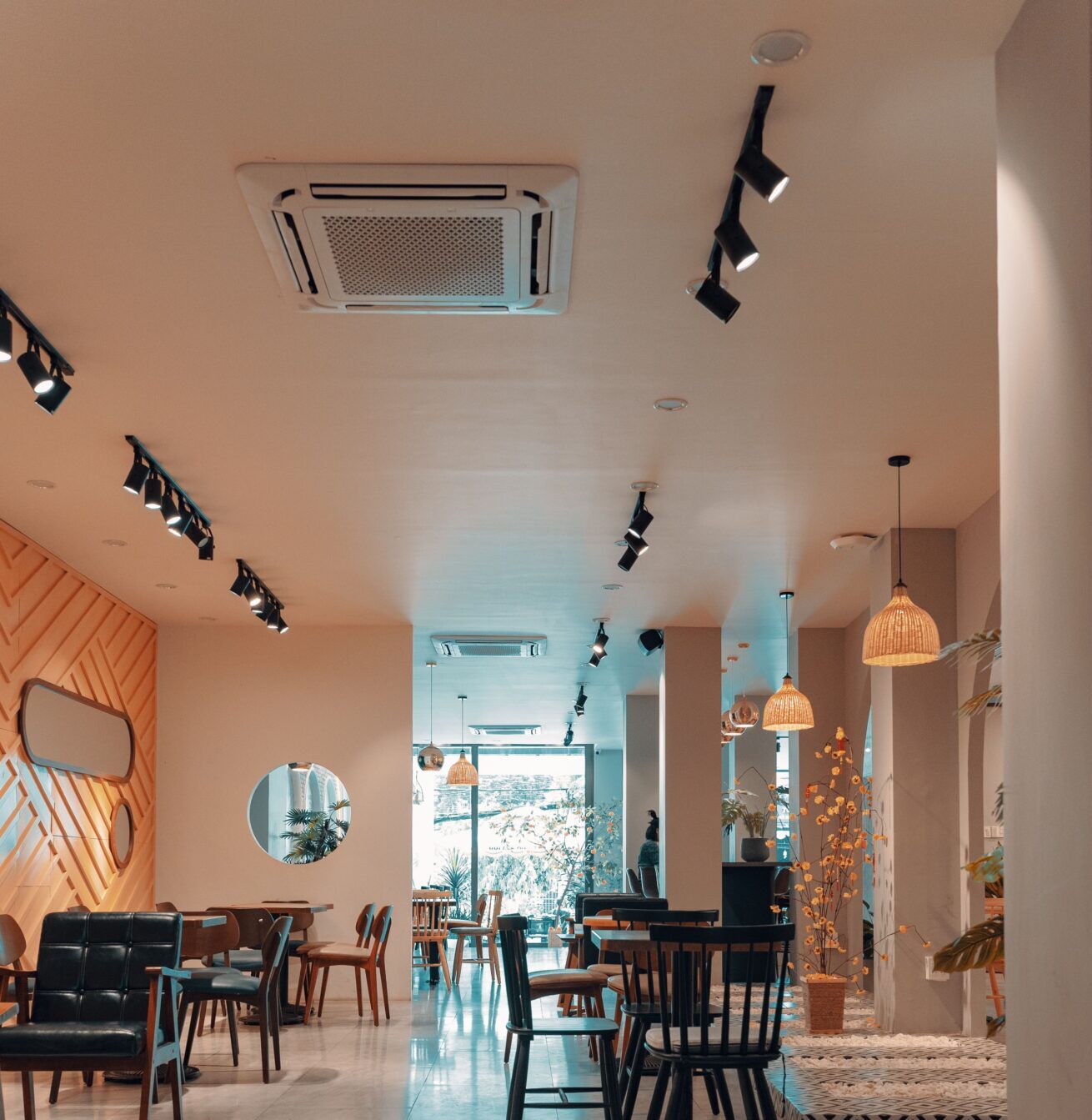
Cassette DC inverter units with 360° airflow are becoming a common choice for commercial and residential air conditioning across Australia. The reason is straightforward. They distribute air evenly through a space, reducing the hot and cold spots that come with single-direction airflow. This article looks at how they work, where they suit best, what IACS offers, and what to think about before installation.
Key Takeaways
- Cassette inverter units with 360° airflow distribute air evenly, reducing hot and cold spots across a room.
- They suit both commercial and residential applications, supporting comfort and potential energy savings.
- IACS distributes a range of Midea cassette inverter units through branches in Brisbane, Perth, Sydney and Melbourne.
- Ceiling space and aesthetic fit are important to check before installation.
- Professional installation by a qualified technician supports long-term performance and warranty validity.
Optimising Airflow Distribution with Cassette DC Inverter Units
Achieving Uniform Temperature Across Your Space
Uneven temperatures in a room usually come down to poor airflow. Cassette inverter units with 360° airflow are designed to address this by distributing air across the full perimeter of the unit. The result is more consistent temperatures across the space, whether that’s an office, a retail floor or a living room.
The Science Behind 360° Airflow
Traditional split systems push air in one or two directions, which leaves dead zones in larger rooms. Cassette units with 360° airflow discharge air through vents positioned around the full circumference of the unit, so air moves outward in every direction at once. In practical terms, this means wider distribution with fewer dead zones, air that reaches further into the room, and faster temperature equalisation across the space.
Eliminating Hot and Cold Spots
Hot and cold spots happen when air doesn’t circulate properly, leaving some areas overcooled and others undercooled. Even airflow distribution helps minimise these temperature differences, which is particularly useful in larger open-plan rooms. The result is more consistent temperatures, improved air circulation and better overall control across larger spaces.
Unpacking the Benefits of 360° Airflow
Enhanced Comfort for Occupants
When air is distributed evenly, occupants in different parts of the room experience the same temperature. That makes a noticeable difference in workplaces, retail environments and family living areas where people are spread across a space.
Improved Energy Efficiency and Cost Savings
By maintaining a consistent temperature, the unit doesn’t have to work as hard to correct fluctuations. Combined with DC inverter technology, this can support meaningful efficiency gains compared to fixed-speed systems. The effects show up as reduced energy use through fewer temperature swings, lower running costs from more efficient operation, and less strain on the unit over time.
Reduced Noise Levels for a Quieter Environment
Because air is distributed more efficiently, these units can often operate at lower fan speeds while maintaining comfort, which helps keep noise levels down in both workplaces and homes. Where a standard air conditioner pushes air in one or two directions, a 360° system circulates air more evenly throughout the room, supporting a quieter and more balanced environment.
Cassette DC Inverter Units in Commercial Settings
Creating Productive Work Environments
A consistent temperature across a workplace supports focus and reduces the temperature complaints that distract from the job at hand. Cassette inverter units help deliver that consistency across offices, retail spaces and other commercial environments.
Meeting Diverse Business Needs
Different businesses have different requirements. A small retail shop, an open-plan office and a hospitality venue each call for something different. Cassette inverter units come in a range of capacities to suit a variety of commercial applications, and individual units can be controlled separately to handle zoning across larger sites.
Seamless Integration into Commercial Spaces
Because cassette units install into the ceiling, they don’t take up wall or floor space, which suits customer-facing environments where appearance matters. They sit flush with the ceiling line and blend in with most fitouts. A well-specified climate control system supports staff productivity, customer comfort and a more consistent environment across the building, while the discreet design keeps the focus on the space itself rather than the equipment running it.
Cassette DC Inverter Units for Residential Comfort
Bringing Superior Climate Control Home
For homes, cassette units offer an alternative to wall-mounted splits or ducted systems. They suit open-plan living areas and larger rooms where consistent temperatures across the space matter.
Aesthetic Appeal and Discreet Design
Where a wall-mounted unit can dominate a room visually, cassette units sit flush with the ceiling, which blends them into the room. The 360° airflow design also means a single unit can cover a larger area, reducing the need for multiple wall splits in open-plan spaces.
Long-Term Value for Homeowners
There are a few reasons cassette units can be a worthwhile longer-term choice. DC inverter technology supports lower running costs, quality components support a longer service life, and a modern, discreet system can add to the appeal of the home overall. Choosing the right system comes down to your needs, your space and your budget, so getting professional advice on what suits your home is the most reliable path.
IACS Cassette Inverter Options: A Closer Look
Exploring the Range of Available Models
IACS distributes Midea cassette inverter units across a range of capacities, from smaller models for individual rooms through to larger units for open-plan and commercial spaces. When choosing a unit, the main things to consider are the cooling capacity in kilowatts matched to the room size, the energy efficiency rating, and the features that suit how the space is actually used.
Features Worth Looking For
Across the Midea cassette inverter range, common features include 360° airflow for even temperature distribution, DC inverter technology for efficient operation, quiet running and a discreet ceiling-flush design. IACS focuses on supplying equipment from established brands, with the technical support and parts availability to back them up after the sale.
Finding the Right Unit for Your Needs
A practical approach is to start by measuring the room and identifying the cooling load, then setting a budget that accounts for both the unit and installation. From there, prioritise the features that matter for how the space is used and speak with the IACS branch nearest you for product and specification advice.
Key Considerations for Cassette Inverter Installation
Assessing Ceiling Space Requirements
Ceiling space is the first practical check before specifying a cassette unit. Take proper measurements rather than estimating, check the manufacturer’s minimum clearance requirements and plan for service access so filters and components can be reached for maintenance later on.
Maintaining Aesthetic Harmony
A few practical points to keep in mind during specification. Match the unit size to the room so the proportions work, choose a finish that suits the ceiling and position the unit to suit the layout of the space rather than dropping it in centrally by default.
Professional Installation for Optimal Performance
Cassette units are more involved to install than wall splits, and proper installation matters for both performance and warranty validity. IACS does not install directly, but we provide installers with the technical data, documentation and support they need. Qualified technicians understand the install requirements, have the right tools for a clean install and meet the conditions that warranties typically require.
The Technology Behind Cassette Inverter Systems
How Inverter Technology Improves Performance
Inverter technology modulates the compressor speed to match the actual demand of the room, rather than running at full output and switching off. That supports more stable temperatures and reduced energy use over time.
Smart Controls for Intuitive Operation
Modern cassette units commonly include features such as programmable timers, remote control operation and real-time energy monitoring, which makes day-to-day use straightforward for both commercial and residential occupants.
Durability and Longevity
A few factors support a longer service life. Quality components from established manufacturers handle daily use well, smoother compressor operation through inverter technology reduces wear, and protective finishes help against environmental wear over time.
| Feature | Traditional AC Unit | Cassette DC Inverter Unit |
| Expected Lifespan | 10 to 15 years | 15 to 20 plus years |
| Maintenance Needs | Higher | Lower |
Regular maintenance, including cleaning filters and coils, supports the long-term performance of any cassette inverter unit.
Cassette inverter units with 360° airflow are a sensible choice for businesses and homes that need consistent temperatures across larger spaces. They distribute air evenly, sit discreetly in the ceiling and suit a range of applications. If you’re considering one, IACS distributes Midea cassette inverter units through branches in Brisbane, Perth, Sydney and Melbourne, with sales and technical support to help match the right unit to the application.
Frequently Asked Questions
They discharge air through vents positioned around the full perimeter of the unit, so air moves outward in every direction at once. This helps cover the whole room from a single point.
In commercial settings, even temperatures support staff focus and customer comfort. In homes, the discreet design and consistent performance suit open-plan living areas and larger rooms.
IACS distributes a range of Midea cassette inverter units. The residential and commercial catalogues on the IACS website have full product information, or you can speak with the branch nearest you.
Check the ceiling space, match the unit to the room size, plan for service access and use a qualified installer.
It modulates the compressor speed to match demand, which supports more stable temperatures and lower energy use compared to fixed-speed systems.
Generally no. Even air distribution means they can often run at lower fan speeds, which keeps noise levels down in both workplaces and homes.